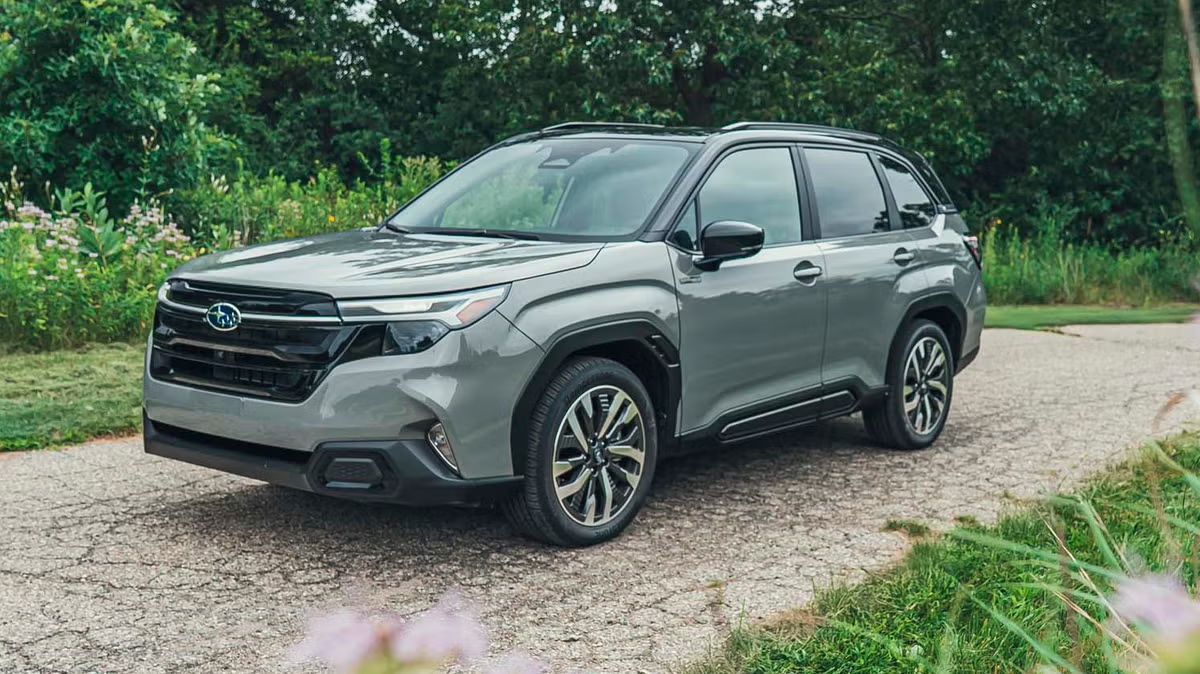
The 2026 Subaru Forester Hybrid is built for shoppers who like the Forester’s practical shape, standard all-wheel drive, and easygoing daily usability, but want stronger fuel economy without switching to a plug-in vehicle. It keeps the familiar Forester formula: a roomy cabin, generous visibility, useful cargo space, and everyday confidence in poor weather. The major difference is the hybrid system, which gives this compact SUV a more efficient edge while preserving the Subaru character many buyers already trust.
What’s New for 2026
The big story is the arrival of a Forester Hybrid in the current-generation Forester lineup. Rather than turning the Forester into a niche electrified model, Subaru uses the hybrid setup to improve one of the SUV’s biggest everyday ownership factors: fuel economy.
For many buyers, this is the version that makes the most sense. It offers the same SUV practicality people expect from a Forester, but with better efficiency than the standard gas-only model. It is also not a plug-in hybrid, which means owners do not need to install a home charger or plan around public charging stations.
The 2026 Forester Hybrid should appeal to drivers who want a simple transition into electrified driving. You fill it with gasoline, drive it normally, and let the hybrid system work in the background.
Confirmed Specs and What They Mean
The Forester Hybrid pairs a Subaru Boxer engine with electric assistance and standard Subaru Symmetrical All-Wheel Drive. That matters because some hybrids gain efficiency by becoming front-wheel-drive focused, while the Forester Hybrid keeps the all-weather traction that has long been central to the Forester’s identity.
Key expected highlights include:
- Standard all-wheel drive
- Hybrid-assisted powertrain
- Compact SUV body style
- Two-row seating
- Strong outward visibility
- Practical cargo area
- Subaru EyeSight driver-assistance technology
What this means in real-world terms is simple: the Forester Hybrid is not trying to be a performance SUV or a luxury EV substitute. It is meant to be a smarter daily driver for people who need space, traction, and efficiency in one package.
Powertrain, Range, MPG, or Performance
The Forester Hybrid is expected to use a 2.5-liter Subaru Boxer engine working with an electric motor and battery system. Total system output has been reported at around 194 horsepower in Subaru’s announced hybrid configuration, which gives it a useful bump over the regular gas-only Forester.
The bigger selling point is fuel economy. Subaru has promoted the Forester Hybrid as delivering noticeably better MPG than the standard gas model, especially in city driving where hybrid systems can recover energy and use electric assistance more often.
This is important for commuters, families, and high-mileage drivers. A vehicle like the Forester often spends its life on school runs, grocery trips, office commutes, weekend errands, and highway drives. Better efficiency in those conditions can make the SUV feel more modern without changing how owners use it.
It is also worth noting that this is not a plug-in hybrid. That makes it less complicated, but it also means the Forester Hybrid is not designed for long electric-only driving. Buyers looking for a vehicle that can complete most short trips without using gasoline may want to compare plug-in hybrid or full-electric alternatives.
Interior and Practicality
The Forester’s cabin remains one of its strongest arguments. The upright roofline, tall windows, and sensible control layout make it feel more open than many compact SUVs with sleeker styling. That gives the Forester Hybrid a practical advantage for families, older drivers, pet owners, and anyone who values easy entry and exit.
Cargo space should remain competitive for the class, and the Forester’s boxy shape makes the space more usable than raw measurements sometimes suggest. The rear seat area is also expected to remain adult-friendly, which makes this SUV a strong fit for households that need one vehicle to handle commuting, errands, road trips, and outdoor gear.
Available technology should include Subaru’s large vertical touchscreen, smartphone integration, connected services, and convenience features depending on trim. The important point is that the hybrid version does not appear to sacrifice the core Forester strengths: comfort, visibility, cargo usefulness, and everyday simplicity.
Safety and Driver Assistance
Safety is one of the Forester’s key selling points, and the Hybrid should continue that focus. Subaru’s EyeSight driver-assistance suite is expected to be standard, with features such as adaptive cruise control, lane-centering assistance, pre-collision braking, and related active-safety systems.
Depending on trim, shoppers may also find available features such as blind-spot detection, rear cross-traffic alert, reverse automatic braking, and a surround-view or driver-monitoring-style technology package.
Final NHTSA and IIHS ratings for the 2026 Forester Hybrid should be checked before publication or purchase. However, the Forester nameplate has historically performed strongly in safety evaluations, and Subaru typically positions safety technology as a core part of the ownership experience.
Who This Vehicle Is Best For
The 2026 Subaru Forester Hybrid is best for buyers who want a compact SUV that feels practical first and efficient second. It is especially compelling for people who live in areas with rain, snow, gravel roads, steep driveways, or changing weather conditions.
It is a strong fit for:
- Commuters who want better MPG without charging
- Small families that need space and safety features
- Outdoor-focused drivers who value standard AWD
- Subaru loyalists ready for a more efficient Forester
- Buyers who want a hybrid but dislike complicated tech transitions
The Forester Hybrid is also a smart choice for people who care more about long-term usability than flashy styling. It is not the loudest vehicle in the segment, but that is part of its appeal.
Who Should Skip It
Some shoppers should look elsewhere. Drivers who want sporty acceleration, premium-brand luxury, or maximum electric-only driving will probably find the Forester Hybrid too practical and restrained.
Skip it if you want:
- A plug-in hybrid with meaningful electric-only range
- A rugged off-road model with maximum towing capability
- A performance-oriented compact SUV
- A luxury interior experience
- The lowest possible upfront price
The standard gas Forester may still make sense for buyers focused mainly on purchase cost, while plug-in hybrid rivals may be better for drivers who can charge daily and want to reduce gasoline use more aggressively.
Main Rivals
The Forester Hybrid enters a competitive compact SUV field. Its most important rivals include the Toyota RAV4 Hybrid, Honda CR-V Hybrid, Hyundai Tucson Hybrid, Kia Sportage Hybrid, and Ford Escape Hybrid.
The Toyota RAV4 Hybrid is likely the most direct competitor because it also offers strong fuel economy, available all-wheel drive, and a long-standing reputation for durability. The Honda CR-V Hybrid counters with a refined cabin and smooth road manners. Hyundai and Kia offer bold styling, generous feature lists, and compelling hybrid efficiency.
Where the Forester Hybrid stands out is its standard all-wheel drive, upright visibility, and outdoors-friendly Subaru personality. It is not just a hybrid compact SUV; it is a Forester that happens to use hybrid power.
Release Date / Availability
The Forester Hybrid has been announced for the U.S. market as part of Subaru’s expanding hybrid lineup. Availability may vary by region, trim, and dealer allocation, so buyers should check Subaru’s official model page and local dealer inventory for the most current information.
Because hybrid SUVs are often in high demand, shoppers interested in a specific color or trim may want to compare inventory early rather than waiting until selection becomes limited.
Final Take
The 2026 Subaru Forester Hybrid makes a lot of sense because it improves the Forester in the exact place many shoppers wanted improvement: fuel economy. It keeps the upright cabin, standard all-wheel drive, easy drivability, and safety-first personality that made the Forester popular, then adds hybrid efficiency without asking owners to change their driving habits.
It is not the most exciting compact SUV, and it is not a substitute for a plug-in hybrid or EV. But for everyday buyers who want a practical AWD SUV with better MPG, the Forester Hybrid may be one of Subaru’s most convincing products.
For shoppers who already had the Forester on their list, the Hybrid should be the version to test-drive first.
Sources
- Subaru Official Forester page: https://www.subaru.com/vehicles/forester.html
- Subaru Media Center: https://media.subaru.com/
- EPA/Fueleconomy.gov vehicle search: https://www.fueleconomy.gov/feg/findacar.shtml
- IIHS vehicle ratings: https://www.iihs.org/ratings
- NHTSA safety ratings: https://www.nhtsa.gov/ratings