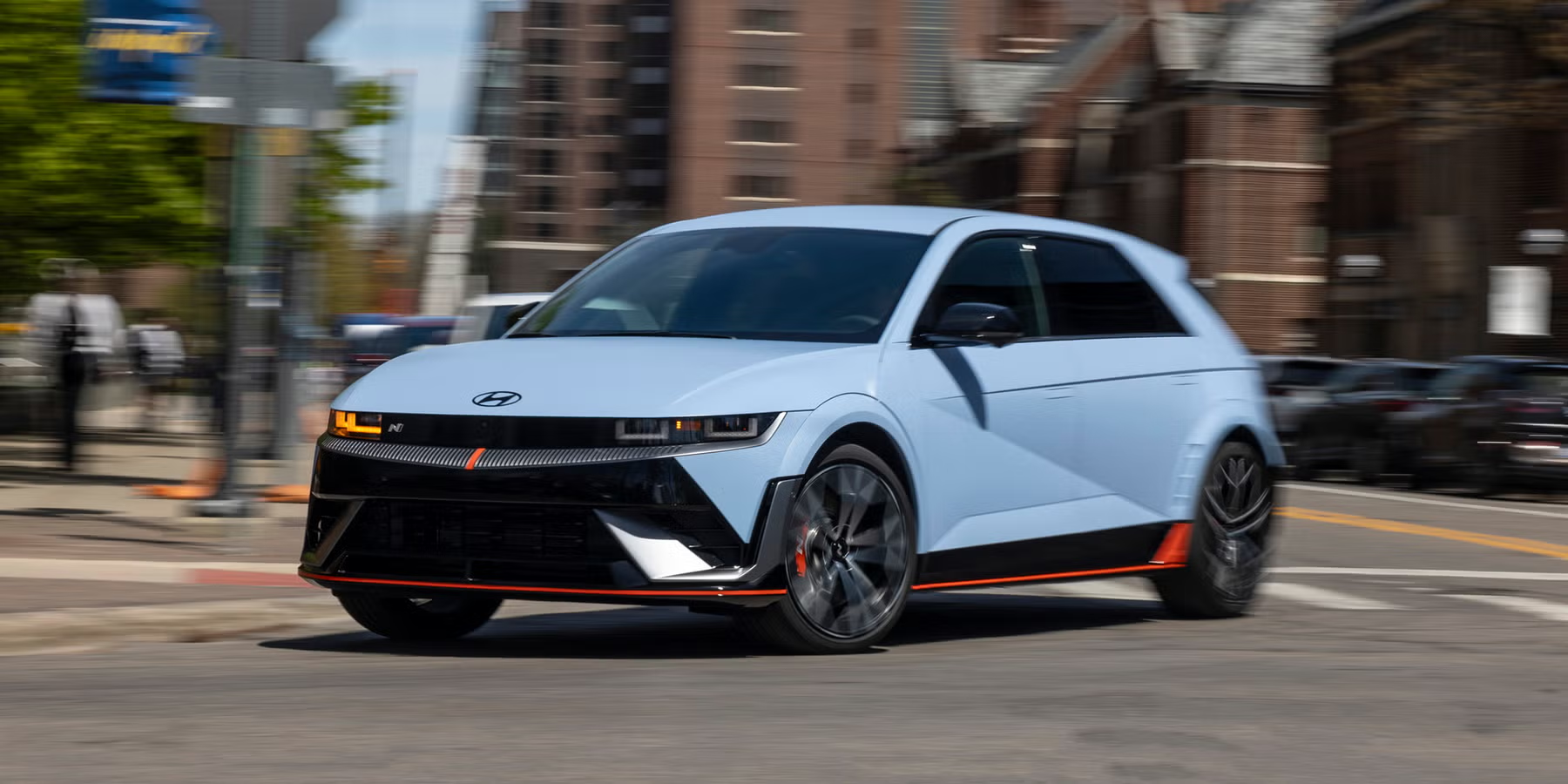
The 2026 Hyundai IONIQ 5 is the kind of electric SUV that makes switching to an EV feel less like a compromise and more like an upgrade. With its sharp design, roomy cabin, advanced technology, and NACS fast-charging compatibility, the IONIQ 5 is built for drivers who want an electric vehicle that fits everyday life. Whether you are commuting, running errands, planning road trips, or simply looking for a more modern SUV, the IONIQ 5 delivers a compelling mix of convenience, comfort, and confidence.
What’s New for 2026
The 2026 Hyundai IONIQ 5 continues to stand out as one of the most practical electric SUVs for drivers who want modern design, everyday usability, and faster public charging access. The biggest shopper-facing story is NACS fast-charging compatibility, which makes the IONIQ 5 easier to live with for buyers who want broader access to public charging networks.
For many EV shoppers, charging confidence is the deciding factor. The IONIQ 5 already had one of the more appealing EV formulas in the segment: spacious cabin, available all-wheel drive, quick acceleration, and an 800-volt-class architecture designed for rapid DC charging. Adding NACS support helps solve one of the biggest friction points for people moving from gas to electric: knowing where they can charge on road trips.
The 2026 IONIQ 5 is best understood as an EV SUV for people who want the benefits of electric driving without feeling like they are making a major practicality tradeoff.
Confirmed Specs and What They Mean
Hyundai’s recent IONIQ 5 updates have centered on larger battery availability, NACS charging hardware, expanded trim variety, and improved real-world convenience. Final 2026 specifications should be checked against Hyundai’s official model page, but the broader direction is clear: the IONIQ 5 is being positioned as a mainstream EV SUV that is easier to charge, easier to use, and more versatile than earlier versions.
The practical meaning is simple. NACS compatibility can reduce charging anxiety by opening access to more charging locations, while the IONIQ 5’s battery and motor choices allow buyers to prioritize either maximum driving range or stronger all-weather performance.
For shoppers comparing EVs, the important takeaway is not just the plug shape. It is the full ownership experience. A practical EV needs range, charging speed, passenger space, cargo flexibility, safety tech, and a user-friendly cabin. The IONIQ 5 checks those boxes better than many style-focused electric crossovers.
Powertrain, Range, MPG, or Performance
The IONIQ 5 has typically offered rear-wheel-drive and all-wheel-drive configurations. Rear-wheel drive is the smart choice for buyers who want maximum efficiency and range, while all-wheel drive adds stronger acceleration and better traction in wet, snowy, or uneven conditions.
EPA-rated range varies by battery, drivetrain, trim, and wheel configuration. Recent IONIQ 5 models have reached more than 300 miles of estimated range in certain rear-wheel-drive configurations, while all-wheel-drive versions trade some efficiency for added power and confidence. That matters because not every buyer needs the same EV. A commuter may value range and efficiency most, while a family in a colder climate may prefer all-wheel drive.
Performance is another reason the IONIQ 5 feels more premium than its size suggests. Electric motors deliver instant torque, so even practical versions feel responsive in traffic. The available all-wheel-drive setup gives the SUV the kind of quick launch and passing power that makes daily driving feel effortless.
The NACS charging update is especially important. For shoppers who have hesitated to buy an EV because public charging felt confusing, a NACS-equipped IONIQ 5 makes the ownership case much stronger.
Interior and Practicality
Inside, the IONIQ 5 feels more spacious than its exterior dimensions suggest. Its EV platform allows for a flat floor, generous passenger space, and a clean cabin layout. This is one of the reasons it works so well as a family vehicle, commuter car, and road-trip SUV.
The cabin design is modern without being overly complicated. Large digital displays, a low dashboard, and smart storage areas help create an open feeling. Rear-seat space is a major strength, especially for adults or growing families who do not want to squeeze into a compact crossover.
Cargo practicality is also a selling point. The rear hatch makes loading groceries, luggage, sports gear, or strollers easier than in a sedan. Fold the rear seats, and the IONIQ 5 becomes useful for larger items as well.
This is where the vehicle’s value becomes clear. Some EVs feel like technology products first and vehicles second. The IONIQ 5 feels like a real everyday SUV that happens to be electric.
Safety and Driver Assistance
The IONIQ 5 has been offered with a strong suite of Hyundai SmartSense driver-assistance features. Depending on trim and configuration, these may include forward collision-avoidance assist, lane-keeping support, blind-spot monitoring, adaptive cruise control, rear cross-traffic assistance, and highway driving assistance.
For buyers, these features matter because EVs are often used as primary household vehicles. A good electric SUV needs more than range and charging speed; it also needs to help reduce stress in commuting, highway driving, parking lots, and family use.
Safety ratings and feature availability can vary by model year and trim, so shoppers should confirm the exact 2026 equipment list before buying. Still, Hyundai has made advanced safety technology a major part of the IONIQ 5’s appeal, and that strengthens its case against both gas SUVs and newer EV competitors.
Who This Vehicle Is Best For
The 2026 Hyundai IONIQ 5 is best for drivers who want an EV SUV that feels futuristic without being impractical. It is a strong fit for commuters, small families, tech-forward buyers, and road-trippers who want faster charging access.
It is especially appealing for:
- Drivers who want NACS fast-charging compatibility
- Families who need real rear-seat space
- Buyers comparing their first EV
- Commuters who can charge at home
- Shoppers who want available all-wheel drive
- Drivers who value design, comfort, and quiet performance
The IONIQ 5 is also a smart choice for people who want an EV but do not want a minimalist cabin that removes too many familiar controls. It feels modern, but still approachable.
Who Should Skip It
The IONIQ 5 may not be the right fit for everyone. Drivers who regularly tow heavier loads may want to compare larger electric SUVs or gas-powered alternatives. Buyers without reliable home, workplace, or nearby public charging should also think carefully before making the switch to any EV.
It may also be worth skipping for shoppers who need maximum cargo height, three rows of seating, or rugged off-road capability. The IONIQ 5 is practical, but it is not a large SUV, a truck, or a dedicated off-road vehicle.
Finally, shoppers who prioritize the lowest purchase cost above all else may want to compare smaller EVs, used EVs, or hybrid SUVs.
Main Rivals
The IONIQ 5 competes with several strong electric SUVs and crossovers. Its most direct rivals include the Tesla Model Y, Kia EV6, Ford Mustang Mach-E, Volkswagen ID.4, Nissan Ariya, Chevrolet Equinox EV, and Toyota bZ4X.
The Tesla Model Y remains a major benchmark because of its charging ecosystem and strong efficiency. The Kia EV6 shares some engineering similarities with the IONIQ 5 but has a sportier personality. The Mustang Mach-E offers bold styling and performance-focused trims. The ID.4 and Ariya lean more toward comfort and approachable SUV manners.
Where the IONIQ 5 stands out is balance. It combines distinctive styling, fast-charging capability, passenger space, and an easy-to-live-with personality. For many shoppers, that balance matters more than winning one spec-sheet category.
Release Date / Availability
Final 2026 Hyundai IONIQ 5 availability should be confirmed through Hyundai’s official website or a local Hyundai dealer. EV availability can vary by region, trim, battery configuration, production timing, and charging-network compatibility.
Because the IONIQ 5 has become an important part of Hyundai’s EV lineup, shoppers interested in a 2026 model should compare trims carefully and ask dealers specifically about NACS hardware, included adapters, charging-network access, battery size, range rating, and available driver-assistance features.
Final Take
The 2026 Hyundai IONIQ 5 is shaping up to be one of the most compelling electric SUVs for shoppers who want an EV that feels advanced, practical, and easier to charge. Its combination of distinctive design, roomy interior, available all-wheel drive, useful driver-assistance technology, and NACS fast-charging compatibility makes it a strong choice for drivers ready to move beyond gas.
The real appeal is confidence. The IONIQ 5 gives buyers the space of a family-friendly crossover, the smoothness of an EV, and the charging flexibility that many shoppers have been waiting for. For anyone comparing electric SUVs, the 2026 IONIQ 5 deserves a serious look.
Sources
- IIHS Hyundai IONIQ 5 safety ratings: https://www.iihs.org/ratings/vehicle/hyundai/ioniq-5-4-door-suv/2025
- Hyundai USA IONIQ 5: https://www.hyundaiusa.com/us/en/vehicles/ioniq-5
- Hyundai Newsroom IONIQ 5 updates: https://www.hyundainews.com/en-us/models/hyundai-ioniq_5-2025-ioniq_5
- EPA Fuel Economy EV ratings: https://www.fueleconomy.gov/